
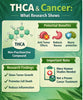
THCA For Cancer
, by Anndrena Benajmin, 5 min reading time
, by Anndrena Benajmin, 5 min reading time
Meta Title: THCA and Cancer: Research, Benefits, and What You Should Know
Meta Description: Discover what scientific research says about THCA and cancer. Learn how tetrahydrocannabinolic acid works, its potential anti-tumor effects, and how it differs from THC.
Primary Keyword: THCA for cancer
Tetrahydrocannabinolic acid (THCA) is a naturally occurring cannabinoid found in raw cannabis plants. Unlike THC, THCA is non-psychoactive, meaning it does not produce the “high” associated with heated cannabis.
THCA converts into THC through decarboxylation, a process that occurs when cannabis is heated.
Researchers are becoming increasingly interested in THCA due to its potential anti-inflammatory, neuroprotective, and anti-tumor properties.
Read more about cannabinoids from the National Center for Biotechnology Information:
https://www.ncbi.nlm.nih.gov/pmc/articles/PMC5549281/
👉 Internal link:
What Is THCA? Benefits, Uses, and Effectshttps://yourwebsite.com/what-is-thca
Scientists are studying how cannabinoids interact with the endocannabinoid system, which regulates immune responses, inflammation, and cellular balance.
Research suggests cannabinoids may:
• Slow tumor growth
• Trigger apoptosis (programmed cancer cell death)
• Reduce inflammation
• Inhibit metastasis in some cancer models
A review published through the National Cancer Institute notes cannabinoids have shown anti-tumor effects in laboratory studies, though human clinical trials remain limited.
Read the research overview:
https://www.cancer.gov/about-cancer/treatment/cam/patient/cannabis-pdq
Some researchers are exploring whether THCA could help support patients alongside conventional treatments.
Chronic inflammation plays a role in many cancers. Early research indicates cannabinoids may help regulate inflammatory responses.
Study reference:
https://www.ncbi.nlm.nih.gov/pmc/articles/PMC2828614/
Cannabis-derived compounds are widely studied for helping manage chemotherapy side effects such as nausea and appetite loss.
Research supported by the American Cancer Society shows cannabinoids may help improve quality of life for some patients.
Some cannabinoids appear to protect nerve cells and reduce oxidative stress.
Researchers have investigated THCA’s neuroprotective potential through preclinical studies.
Scientific reference:
https://pubmed.ncbi.nlm.nih.gov/28861498/
Many people confuse THCA with THC, but they function differently.
| Feature | THCA | THC |
|---|---|---|
| Psychoactive | No | Yes |
| Found in | Raw cannabis | Heated cannabis |
| Research focus | Anti-inflammatory potential | Pain and nausea relief |
THCA’s lack of psychoactive effects may make it appealing for people interested in cannabinoid research without intoxication.
👉 Internal link:
THCA vs THC: Key Differences Explainedhttps://yourwebsite.com/thca-vs-thc
Because heating converts THCA into THC, people seeking THCA often use products that avoid high temperatures.
Common methods include:
• Raw cannabis juice
• THCA tinctures
• THCA concentrates
• Capsules or supplements
Regulations around cannabis products vary depending on country or region.
You can review regulatory information from the World Health Organization:
https://www.who.int/news-room/questions-and-answers/item/cannabis
Although early studies suggest cannabinoids may influence cancer cell behavior, scientists emphasize that THCA is not a proven cancer treatment.
According to research compiled by the National Institutes of Health, most cannabinoid research in cancer remains at the preclinical stage.
Research overview:
https://www.ncbi.nlm.nih.gov/pmc/articles/PMC6387667/
More clinical trials are needed to fully understand how THCA may interact with cancer biology.
THCA is gaining attention as researchers explore how cannabinoids interact with the body’s endocannabinoid system.
Early findings suggest potential benefits related to inflammation, cellular regulation, and tumor pathways, but the evidence remains preliminary.
Anyone considering cannabinoid products for medical purposes should consult qualified healthcare professionals.